| Text and pictures by
Olof Janson unless otherwise stated |
![]() |
updated 2008-10-06
1942.
|
By this time more than 100 different companies made and/or sold the Commando knives. |
![]() |
|
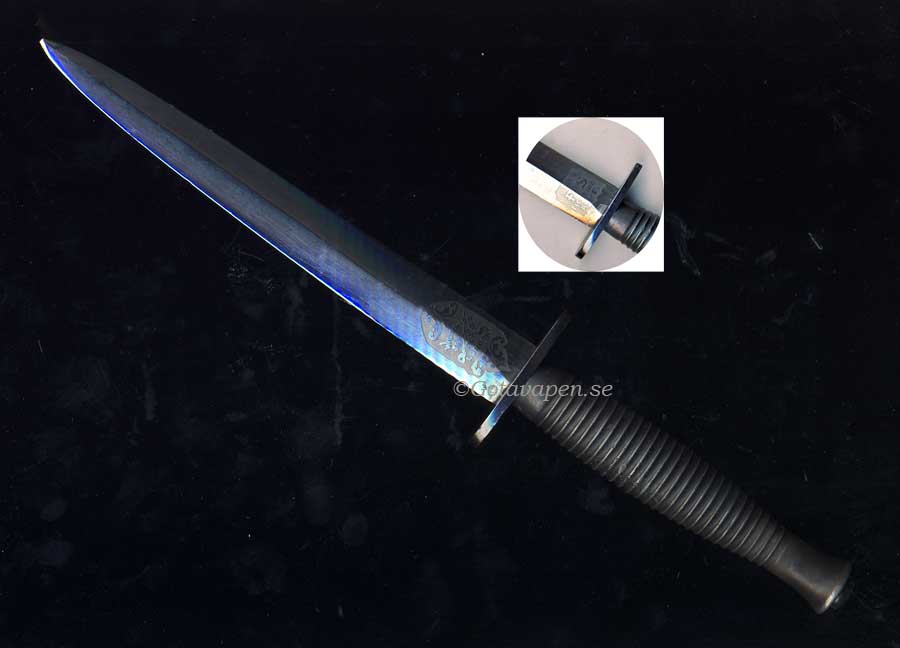
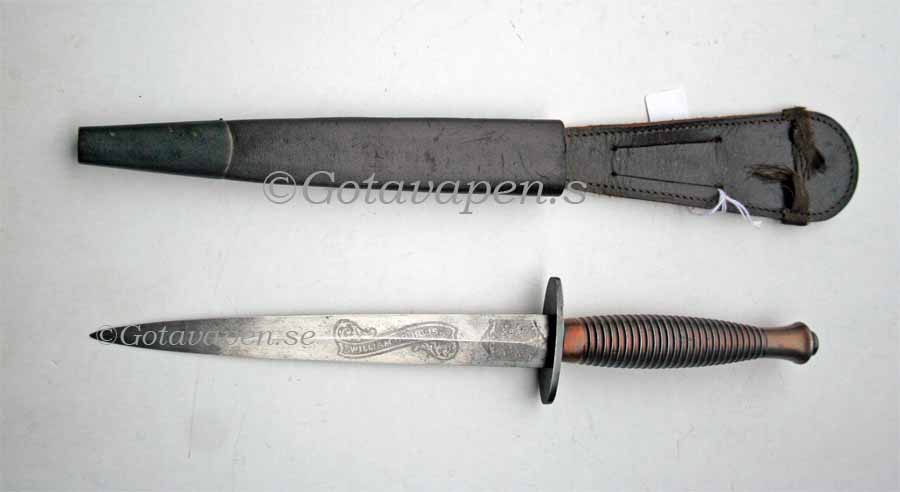
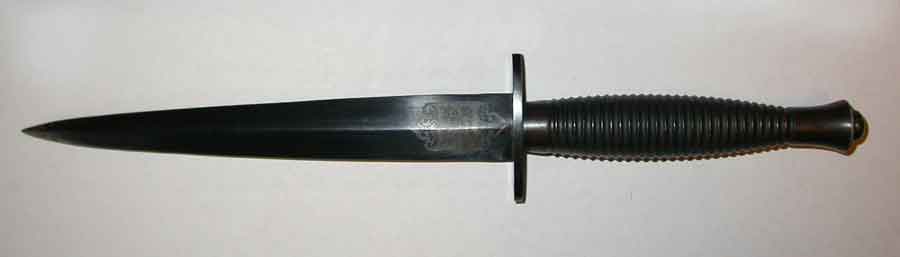
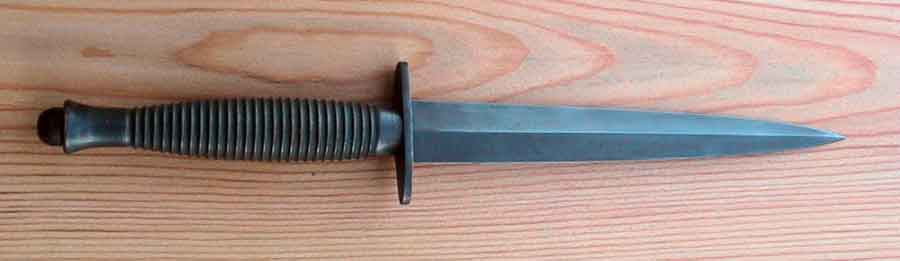
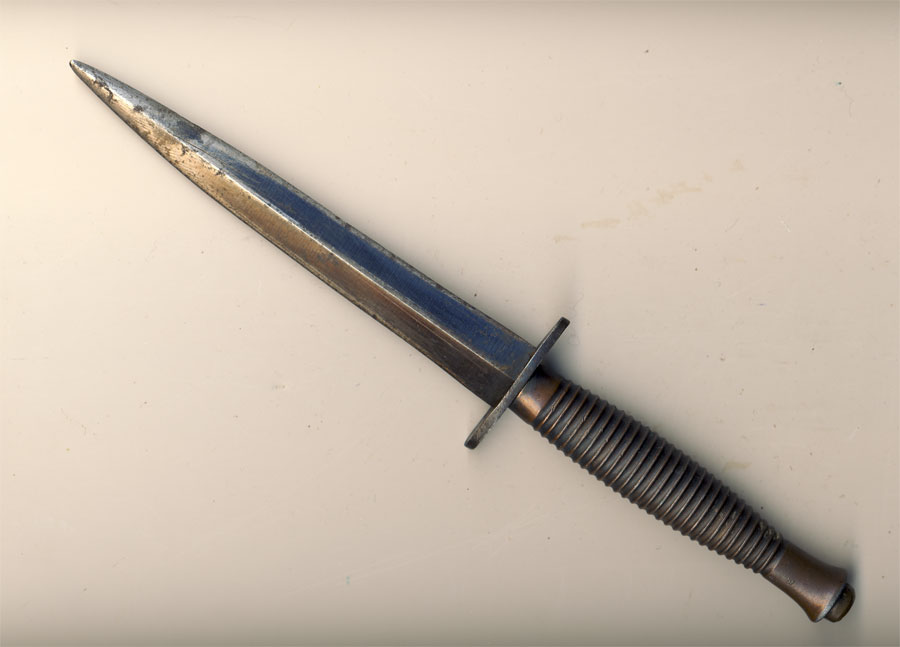
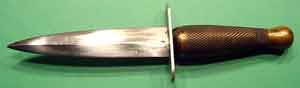
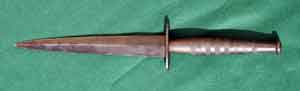
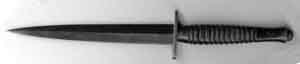
Here is a typical 3rd Pattern in mint
conition from late WW2 production. |
|
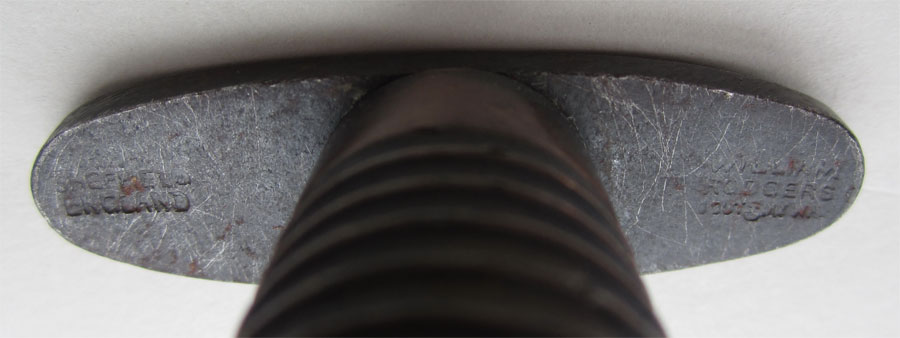
To support the demand for faster and cheaper production a new cast grip was
produced. It is thought to be the design of the Joseph Rodgers firm, of Sheffield. In about September of 1942, the so-called ring grip pattern was introduced, and quickly became standard. The blade was now machine forged. Wilkinson Sword started the production of the 3rd Pattern 20th of October 1943. This can clearly be seen in their orders due to the different price (16s/knife compared to 17s 4d for 2nd Pattern). |
![]() |
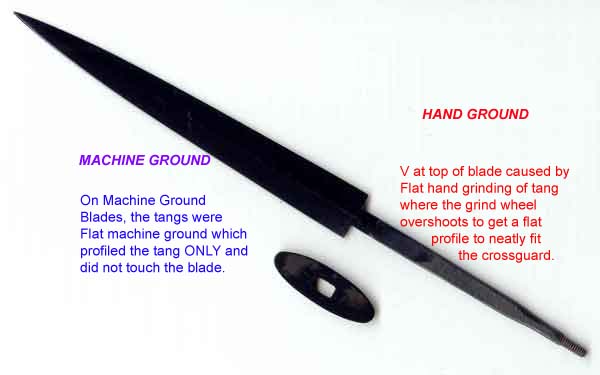
The new type of
machine forged
blade
without the small V-shaped wedge.
Special thanks to Robert Wilkinson Latham |
![]() |
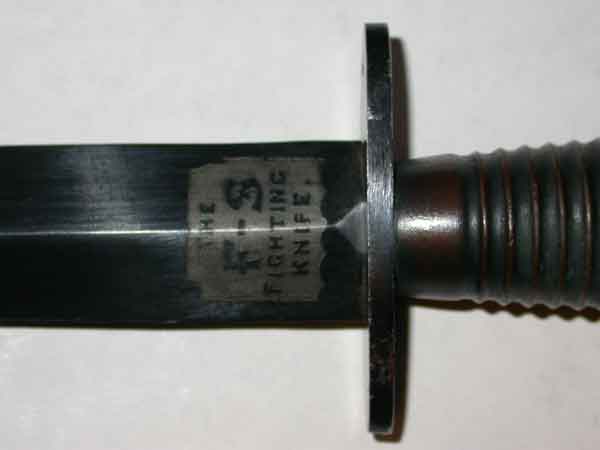
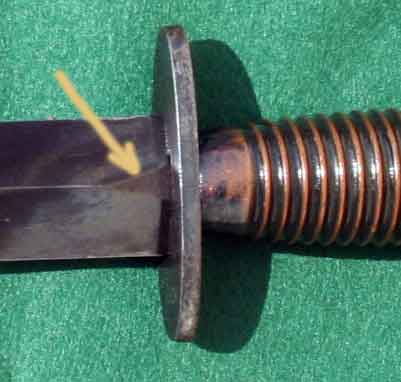
The small V-shaped wedge is a clear sign of a hand grounded blade. It is seen here on the picture, close to the hand guard. |
![]() |
|
|
|
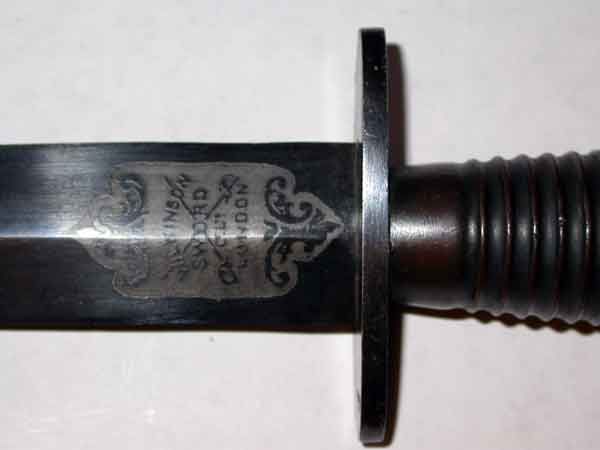
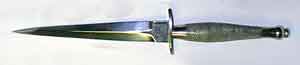
This is a 3rd Pattern Commando knife made by Wilkinson Sword Co. |
![]() |
The small wedge of a hand grounded blade can be seen here close to the hand guard |
![]() |
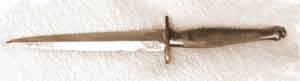
This 3rd Pattern Commando knife most likely made by Wilkinson Sword Co. |
|
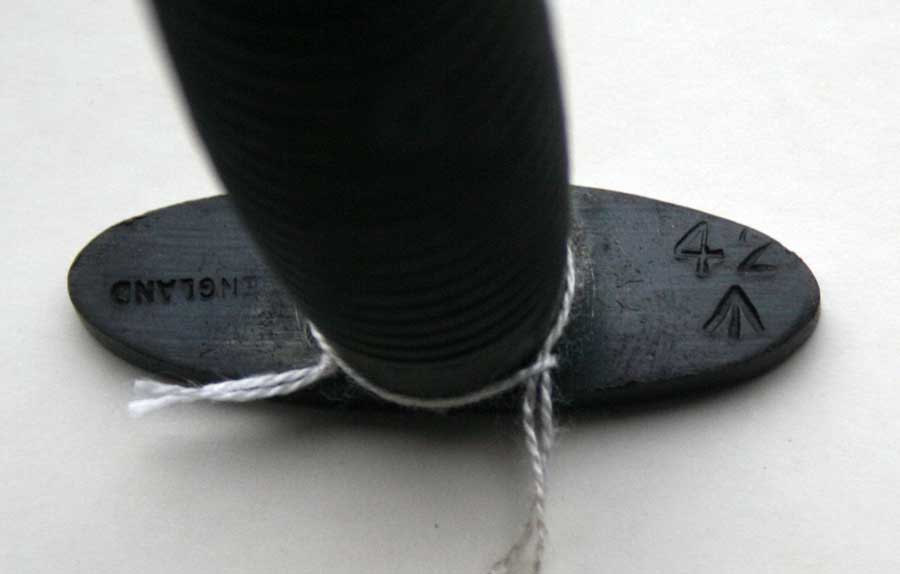
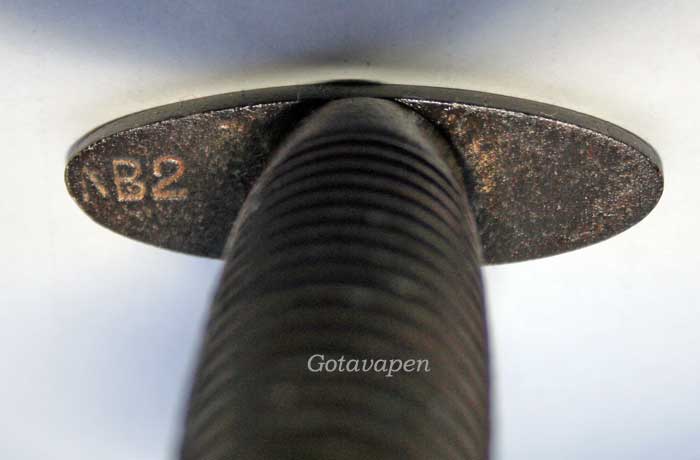
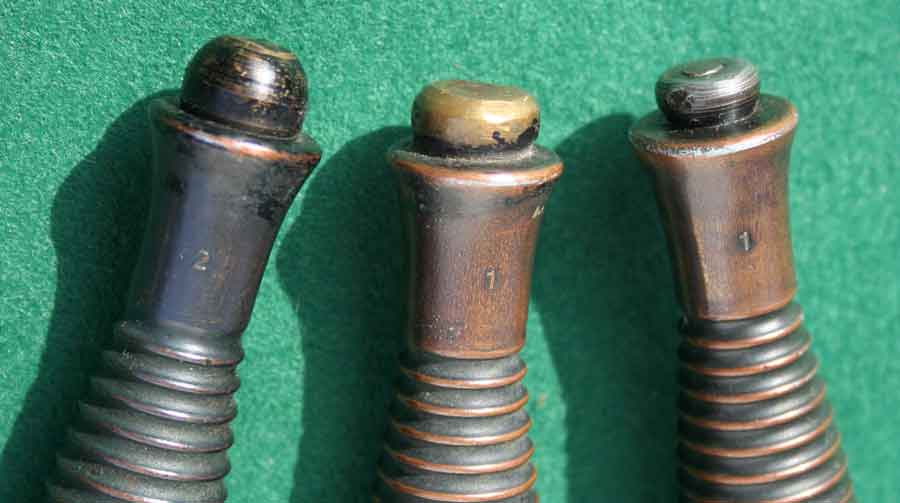
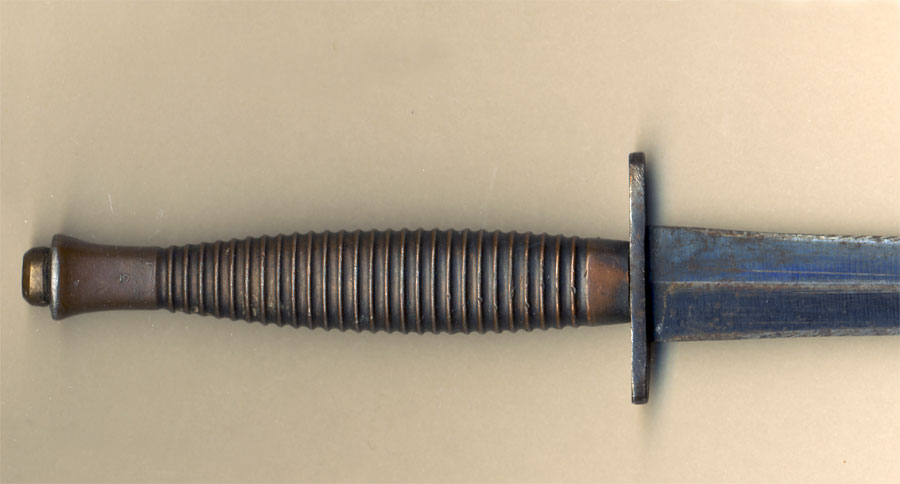
This handle deviates from the original composition of Fairbairn and Sykes to the extent that Fairbairn clearly disliked it and called it a catastrophe, destroying the reputation of the F-S Fighting knife. The perfect balance was lost. The handle was also likely to slip if it became wet from water or blood. There are not many variations of the third Pattern, except F-S and Wilkinson logos on some. The pommel nuts vary and the number on top of the hilt vary from 1 - 4. The hilts of Pattern 3 are all made by the same company - Wolverhampton Die Casting Ltd Wolverhampton, England. Each grip has a small number between 1 and 4 cast on the pommel. These numbers refer only to the mould used to cast the hilt. Wilkinson Sword delivered 163 565 knives with black finish of both 2nd and 3rd Pattern together. From the end of 1942 until 1945 about 200 000 knives of this type were produced for MoD.
|
![]() |
||
|
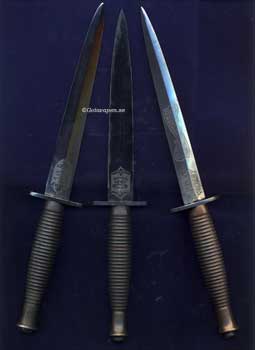
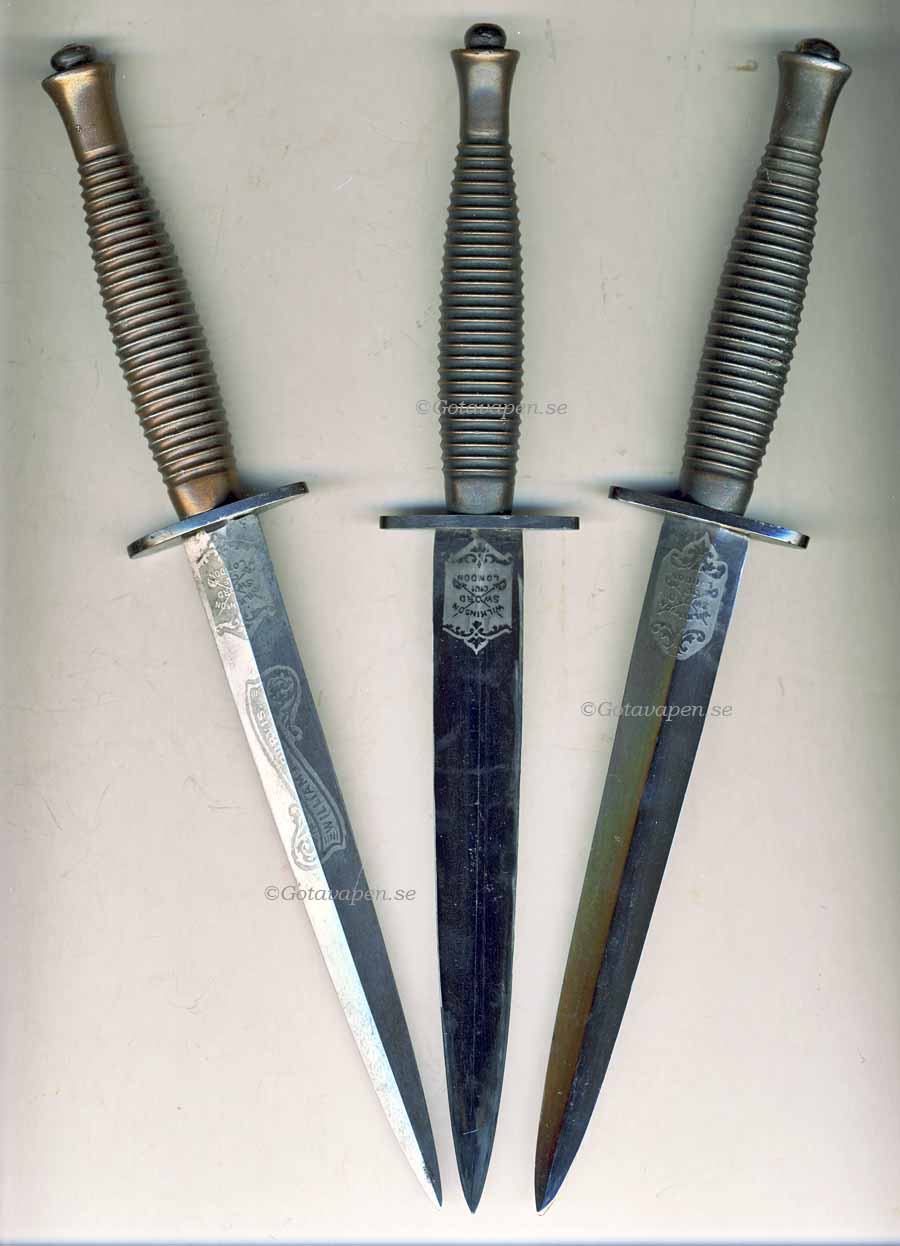
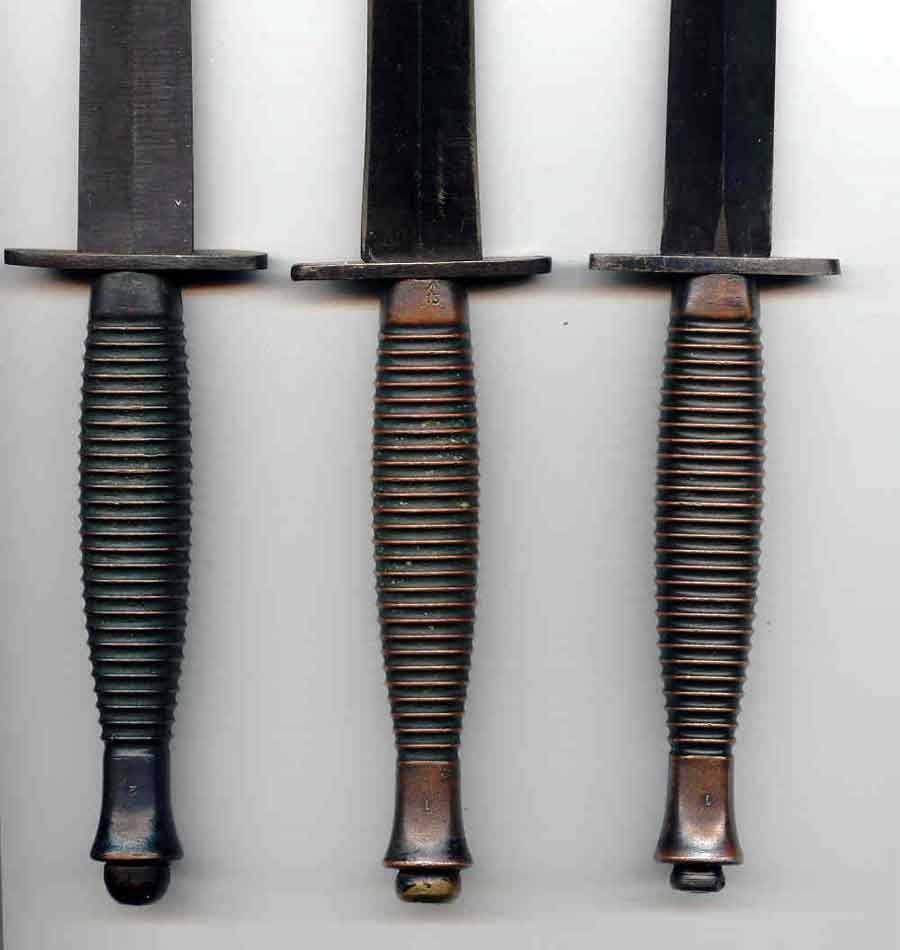
From left to right: The mint P3 knife |
P3 knife marked Mechanically ground blade
|
P3 with Indian acceptance (Note the small wedge on the blade close to the hand guard) . |
![]() |
|
Note the
different pommel nuts and cast numbers on the hilts. |
| Specifications for 3rd Pattern Commando Knife. | ||
| Length over all | 11.456" - 11.85" | 291 - 301.0 mm |
| Length of blade | 6.732" - 7.00" | 171 - 177.8 mm |
| Wheight | 250 - 260 gram | 250 - 260 gram |
![]() |
|
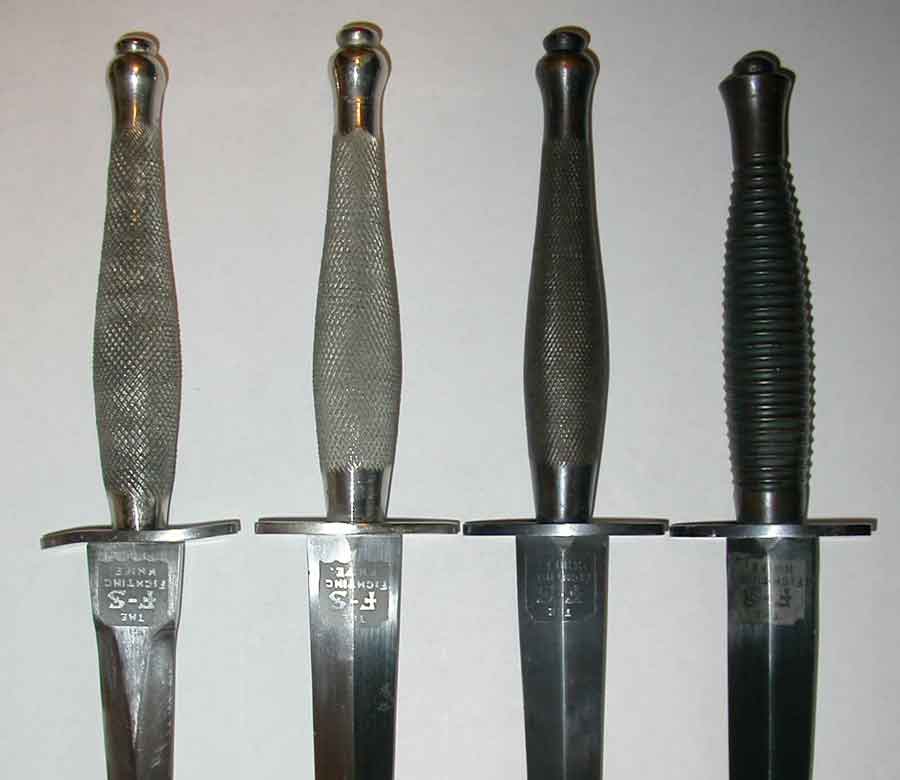
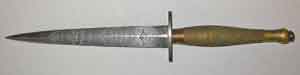
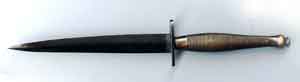
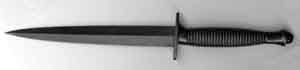
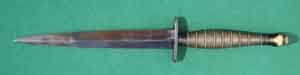
F-S knives made by Wilkinson Sword Co. From left to right: 1st Pattern; 2nd Pattern; 2nd Pattern; 3rd Pattern |
![]() |
Forming of Commandos |
![]() |
The Shanghai fighting knives |
|
There are three basic modells of the F-S fighting knife. |
|
|
1st Pattern F-S Fighting knife |
![]() |
2nd Pattern F-S Fighting knife |
![]() |
2nd Pattern F-S Fighting Private Purchase knife |
![]() |
2nd Pattern F-S Fighting w/o Wilkinson
trademark. like B2, Fat Man, Reverse Knurling |
|
3rd Pattern F-S Fighting knife |
![]() |
Beaded & Ringed - Roped & Ringed |
![]() |
|
|
Wood handles. |
![]() |
OSS -
Stiletto w.'Pancake Flapper' and |
![]() |
|
|
|
|
![]() |
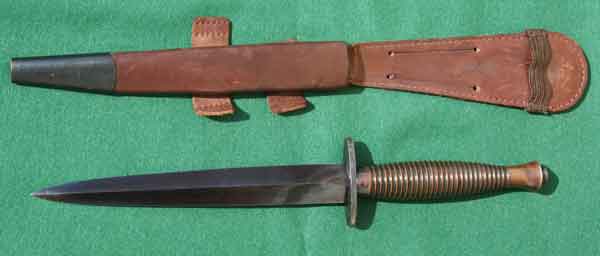
Sheaths |
![]() |
Marks |
![]() |
UK Commando knives; Postwar production |
![]() |
The Stalingrad Sword made by Wilkinson Sword. |
|
I want
to give special acknowledgement to these gentlemen,
|
References:
| Robert Wilkinson Latham | His own web site |
| Alan W. Locken | Commando 1940 - 1945 |
| Robert A. Burlein | Allied Military Fightingknives |
| Ron Flook | British and Commonwealth military knives. |
| Fredrick J. Stephens | Fighting Knives |
| Frank Trzaska | The O.S.S. Stiletto - Knife World February 1998. |
| Frank Trzaska | The Raider Stiletto - Knife World July 1997 |
| Kelly Yeaton | The First Commando Knives. |
| John Nowhill & son | Sheffield |
| Michigan knives | |
| Dr. William Windrum | The earliest commando knivesAllan W. Locken – Commando 1940 - 1945. |
|
Back to in Swedish
|